Network Latency Variables Shaping Bonus Sequencing Timelines Across Hybrid Reel and Dealer Interfaces in Portable Platforms
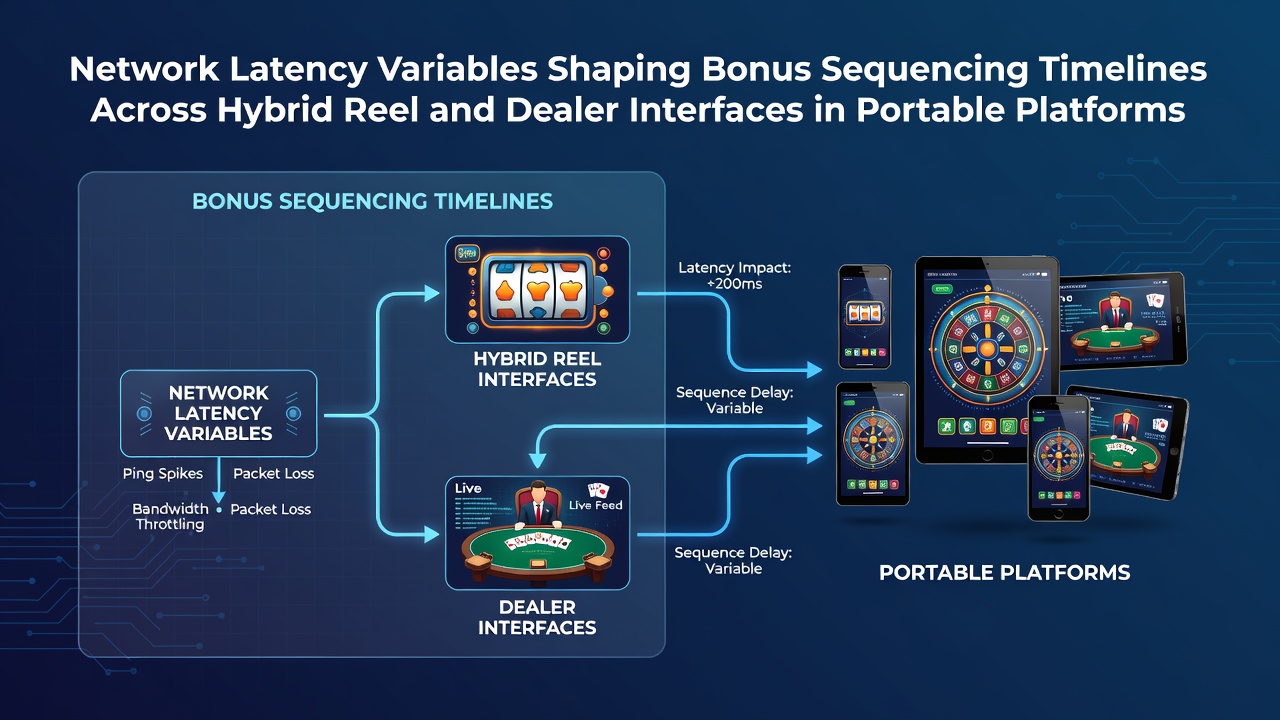
Hybrid reel and dealer interfaces on portable platforms combine slot mechanics with live table elements, yet network latency introduces measurable delays that reorder bonus activation sequences. Server synchronization relies on consistent packet delivery, while variables such as geographic distance, signal interference, and protocol overhead alter the precise moment when free rounds or multiplier triggers execute across both reel and dealer components.
Core Latency Factors in Mobile Hybrid Systems
Transmission delays stem from multiple measurable sources including round-trip times between user devices and regional data centers, along with processing queues at intermediary network nodes. Mobile operators report average latencies ranging from 20 to 80 milliseconds on 5G connections during off-peak hours, whereas 4G networks frequently record 40 to 120 milliseconds under similar conditions according to data compiled by the Australian Communications and Media Authority. Congestion during peak evening periods adds further jitter that disrupts teh ordered delivery of bonus commands.
Device-side variables compound these effects because portable hardware must decode incoming streams while simultaneously rendering reel animations and dealer video feeds. Researchers at the University of Nevada Reno documented how thermal throttling on mid-range smartphones extends local processing times by up to 35 percent during extended sessions, creating additional offsets in bonus sequencing. Operating system background tasks and memory allocation further influence how quickly a device acknowledges server signals that initiate the next stage of a hybrid promotion.
Sequencing Disruptions Between Reel and Dealer Elements
Bonus timelines in hybrid environments follow predefined scripts where reel outcomes feed into dealer table modifiers or vice versa. Latency spikes above 100 milliseconds can invert this order, causing a multiplier earned on the dealer side to apply after the subsequent reel spin has already resolved. Industry observers note that such reorderings reduce predictability for players who track cumulative rewards across both interfaces.
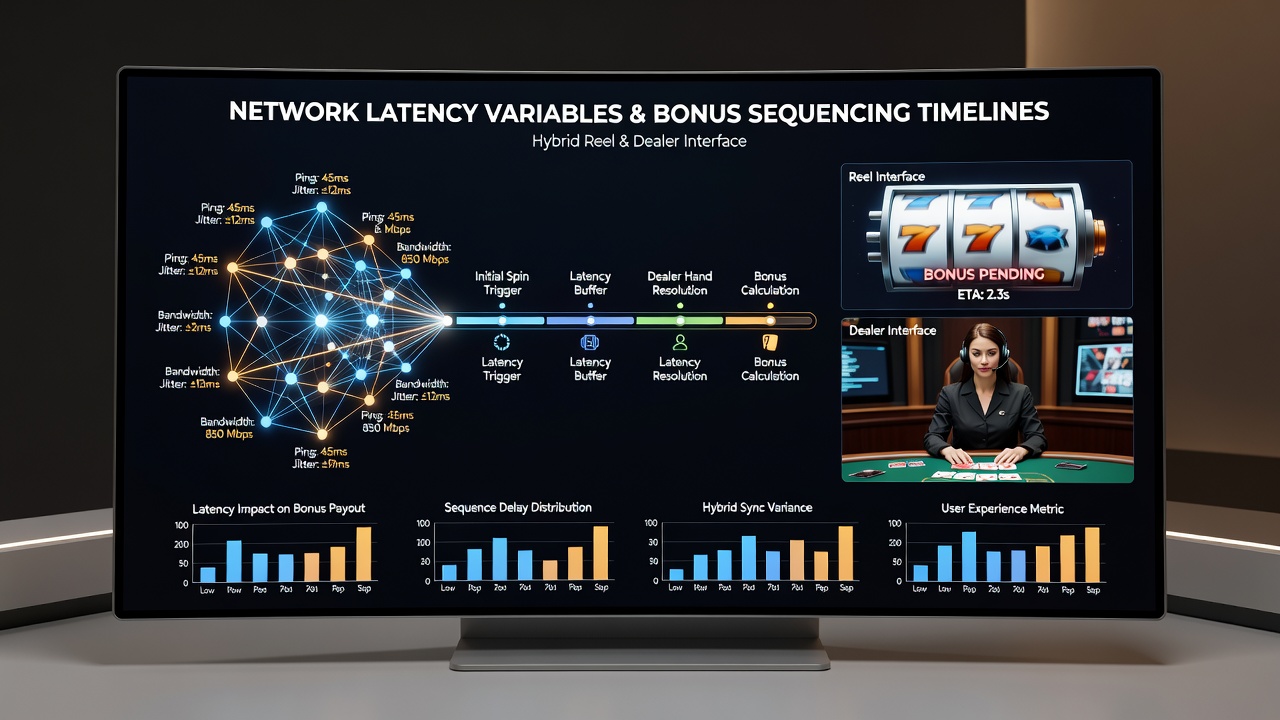
Packet loss introduces another layer of complexity because dropped data units force retransmission protocols to request missing information, extending the interval between consecutive bonus stages. Studies from the IEEE Gaming Technology Committee indicate retransmission events occur approximately once every 200 packets on average cellular links, with each recovery adding 150 to 300 milliseconds depending on network conditions. These intervals accumulate across multi-stage promotions and shift the effective window in which combined reel-dealer bonuses remain active.
Regional Infrastructure and Platform Adaptations
Geographic placement of edge servers influences baseline latency for users in different territories. Platforms that route traffic through centralized European hubs experience higher average delays for Asia-Pacific connections, while localized nodes in North America reduce cross-continental lag. In June 2026 several operators expanded edge deployments in Southeast Asia following regulatory updates from the Singaporean Infocomm Media Development Authority, resulting in documented reductions of 25 to 40 milliseconds for regional users accessing hybrid titles.
Developers implement client-side prediction algorithms that anticipate bonus triggers and pre-load associated assets, yet these mitigations remain imperfect when actual server confirmation arrives after the predicted window. Adaptive bitrate streaming for dealer video streams adjusts quality in response to measured throughput, but abrupt drops still interrupt the synchronization required for seamless reel-to-table bonus handoffs.
Measurement Approaches and Industry Responses
Operators track latency through embedded telemetry that logs timestamp differentials between device requests and server acknowledgments. Aggregated datasets reveal seasonal patterns, with summer months showing elevated jitter attributed to increased mobile data usage during travel periods. Calibration routines that periodically test connection quality allow platforms to throttle non-essential visual elements when thresholds exceed preset limits, preserving core bonus timing integrity.
Third-party testing firms publish comparative reports that rank operator infrastructure by average observed latency across sample device populations. These benchmarks help developers prioritize server allocation adjustments and refine the sequencing logic that governs how reel outcomes influence subsequent dealer bonuses.
Conclusion
Network latency variables continue to define the operational boundaries of bonus sequencing in hybrid mobile environments, with measurable impacts arising from transmission delays, device processing, and regional infrastructure differences. Ongoing deployment of localized servers alongside refined client prediction techniques addresses some timing inconsistencies, yet the fundamental relationship between packet delivery and ordered reward activation persists as a central consideration for platform stability.